Does Porcelain Crack in Winter?
Does porcelain crack in winter? This is one of the biggest questions homeowners ask before choosing porcelain paving. With the UK’s mix of heavy rain, frost, and freeze–thaw cycles, it’s understandable to worry about durability.
The good news?
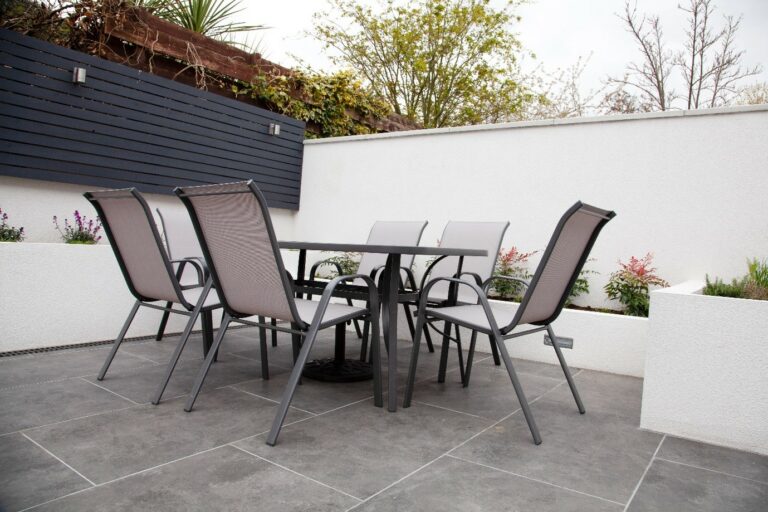
High-quality outdoor porcelain paving does not crack in winter and is actually one of the most frost-resistant materials you can install in your garden.
Here’s everything you need to know.
1. Porcelain Has Extremely Low Water Absorption (<0.5%)
Unlike sandstone or concrete slabs, porcelain absorbs almost no water.
This means:
- No expansion when temperatures drop
- No freeze–thaw cracking
- No moisture damage inside the tile
This ultra-low absorption is the main reason porcelain is labelled frost-proof and perfect for British winters.
2. Porcelain Is Kiln-Fired at Over 1200°C
During manufacturing, porcelain is vitrified, the clay particles fuse into a dense, rock-hard material.
Benefits:
- Structural stability
- High strength
- No internal pores
- Resistant to cracking under temperature changes
This makes it stronger than concrete slabs, sandstone, and even most ceramic tiles.
3. EU/UK R11 Outdoor Porcelain Is Designed for Freeze–Thaw Conditions
Outdoor porcelain paving is tested to EN standards for frost resistance.
So when you buy R11-rated 20mm outdoor porcelain, it is manufactured specifically for:
- Heavy rain
- Snow
- Ice
- Sub-zero conditions
- Repeated freeze–thaw cycles
You’re not getting indoor tiles ,you’re getting a product made for the British climate.
When Can Porcelain Crack? (Rare Cases to Watch For)
Porcelain itself doesn’t crack from winter temperatures, but improper installation can cause issues.
Here are the ONLY situations where cracks may appear:
1. Laid Without Priming Slurry
Porcelain needs a proper bond.
If laid dry or on dots/dabs, slabs can loosen → movement → cracking.
2. Poor Sub-base or No Full Bed
A weak or uneven base can flex in freezing weather.
Porcelain must sit on:
- Compacted MOT Type 1
- Full mortar bed
- Slurry primer
- Outdoor jointing compound
3. Incorrect Jointing (Gaps Too Narrow)
Porcelain expands slightly like all outdoor materials.
If grouted joints are too tight, pressure can build at the edges.
Correct joint size: minimum 3–5mm.
4. Cheap Indoor Tiles Used Outdoors
Indoor porcelain (often 8–10mm) is not frost-rated.
Always choose 20mm R11 outdoor porcelain.
Does Porcelain Become Slippery in Winter?
No and this is another reason it’s ideal for UK winter.
Outdoor porcelain paving usually comes with an R11 anti-slip rating, which means:
- Textured surface for grip
- Safe in rain
- Safe in frost
- Suitable for patios, walkways, and steps
This is much safer than glossy ceramics, sandstone algae build-up, or slippery concrete.
How to Protect Porcelain Paving in Winter (Low Maintenance)
Even though porcelain is winter-proof, a couple of simple steps help keep it perfect:
-Sweep leaves and debris (avoids moss)
-Pressure wash occasionally
-Check joints before harsh weather
-Avoid using metal shovels for snow (can scratch edges)
Buy Winter-Proof Porcelain Paving From Stone & Porcelain
If you’re looking for long-lasting, frost-proof porcelain paving that can handle the UK winter, you’re in the right place. At Stone & Porcelain, we supply premium outdoor porcelain slabs with fast nationwide delivery, expert guidance, and reliable customer service.
Shop Online:
Porcelain Paving Collection – https://stoneandporcelain.co.uk/collections/porcelain-paving
Request a Free Sample – https://stoneandporcelain.co.uk/pages/free-sample
Get a Quick Quote – https://stoneandporcelain.co.uk/pages/contact-us
Visit Us:
Stone & Porcelain Ltd
Abbotsfield Road
Saint Helens
WA9 4HU
Whether you’re a homeowner designing your dream patio or a trade professional working on multiple builds, our team is here to help you choose the best porcelain for UK winters.