What Primer Should I Use for Porcelain Paving?
When laying porcelain paving, using the correct primer is one of the most important steps in achieving a long-lasting installation. While porcelain paving is extremely durable and low maintenance, its smooth surface means it doesn’t naturally bond well with mortar.
Applying a suitable slurry primer creates a strong bond between the paving slab and the mortar bed, helping to prevent movement and reducing the risk of future lifting or failure.
In this guide, we’ll explain what primer to use, why it’s important, and how to apply it correctly.
Why Do You Need a Primer?
Unlike natural stone, porcelain paving has a very low water absorption rate and a smooth underside. This makes it difficult for mortar alone to create a reliable bond.
A slurry primer acts as a bonding layer between the slab and the mortar, significantly improving adhesion and helping your patio remain secure for years to come.
Skipping this step can lead to loose slabs, rocking paving and costly repairs later.
What Primer Should You Use?
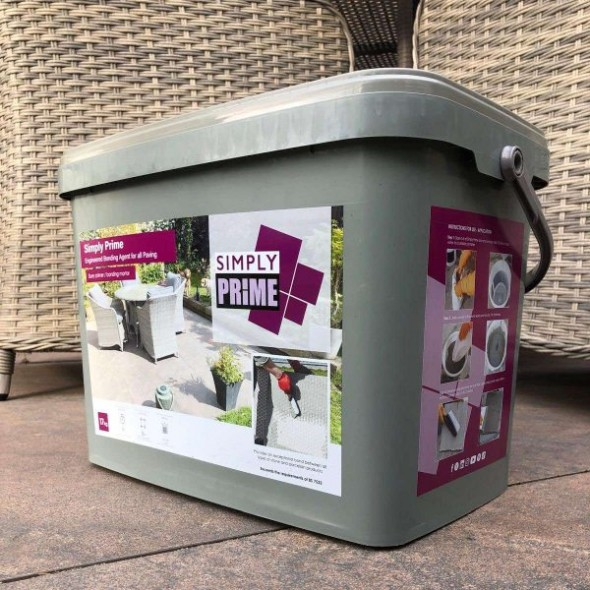
For porcelain paving, you should always use a slurry primer specifically designed for external paving installations.
These products contain cement and bonding agents that create a strong mechanical bond between the slab and the mortar bed.
Always choose a primer that is suitable for outdoor use and follow the manufacturer’s mixing and application instructions.
How to Apply Primer
Applying slurry primer is straightforward but should be done carefully.
Step 1 – Prepare the Slab
Ensure the underside of the porcelain slab is clean and free from dust or debris.
Step 2 – Mix the Primer
Mix the slurry primer according to the manufacturer’s instructions until it reaches a smooth consistency.
Step 3 – Apply Evenly
Using a stiff brush, cover the entire underside of the slab with an even coat.
Do not leave any bare patches, as this can weaken the bond.
Step 4 – Lay Immediately
Lay the slab onto a full mortar bed while the primer is still wet.
This creates the strongest possible bond between the slab and the mortar.
Common Mistakes
Avoid these common errors:
- Laying porcelain without primer
- Applying primer to only part of the slab
- Letting the primer dry before laying
- Using spot bedding instead of a full mortar bed
- Mixing the primer incorrectly
Taking the time to prepare properly will help ensure a professional, long-lasting installation.
Can You Use PVA Instead?
No.
PVA is not designed for external paving and should never be used as a substitute for slurry primer.
A dedicated paving primer is specifically formulated to withstand moisture, frost and outdoor conditions.
Frequently Asked Questions
Is slurry primer essential?
Yes. Most porcelain paving manufacturers recommend using a slurry primer to achieve a secure bond.
Can I use primer on natural stone?
Many installers also use slurry primer on natural stone, although requirements vary depending on the stone and manufacturer.
How long does slurry primer take to dry?
Porcelain slabs should normally be laid while the primer is still wet to achieve the best bond.
What happens if I don’t use primer?
Without primer, porcelain slabs are far more likely to become loose over time because mortar does not bond effectively to the smooth surface.
Choosing the Right Products
Using the correct primer is one of the simplest ways to improve the strength and longevity of your patio. Combined with a full mortar bed and a quality jointing compound, it helps create a professional installation that will perform for years to come.
If you’re unsure which primer is best for your project, our team is happy to help.
Browse our range of porcelain paving and installation products to find everything you need for your next project.